
Coochin Creek Call-Ins
Mythbust with our FAQs and Take Action
❌ MYTH 1: "It's just environmentalists opposing this."
✅ FACT: Opposition is coming from a Community Coalition representing 10 local organisations and thousands of residents across the Sunshine Coast and surrounding regions.
This includes:
- Environmental groups
- Resident associations
- Wildlife organisations
- Community & catchment groups
This is not fringe activism.
This is broad-based community concern.
Several media headlines have framed the story as “environmentalists oppose.” That framing minimises the scale and diversity of local opposition. It also doesn't count the hundreds of community submissions objecting to this development during the limited consultation during the call-in 'process'
Let’s look at the Decision Notice itself …
❌ MYTH 2: "The project is tightly controlled — all risks are solved."
✅ FACT: The Conditions of Approval identify significant impact areas requiring management, including:
⚠Acid Sulfate Soil management
⚠ Noise monitoring and compliance reporting
⚠ Traffic Management Plans for each event
⚠ Bushfire and emergency evacuation planning
⚠ Environmental Management Plans prior to operation
When an approval requires extensive post-approval management plans which still don't address all the issues, it confirms impacts are anticipated and must be actively mitigated - or better still, avoided!
It does not mean risks do not exist.
🚨IMPORTANTLY:
This proposal was subject to a Ministerial call-in by Planning Minister Jarrod Bleijie MP, meaning the appropriate Planning Act assessment pathway, including assessment by the Sunshine Coast Regional Council — including full public scrutiny and accountability mechanisms that usually apply to development applications — was bypassed.
As a result, this mega-scale, multi-risk complex proposal has undergone significantly less transparent assessment than many routine local applications.
The conditions imposed are not evidence that risk is resolved — they are evidence that risk exists and should be avoided
❌ MYTH 3: “State approval means work can commence.”
✅ FACT: State approval does not remove obligations under the Environment Protection and Biodiversity Conservation Act 1999 (EPBC Act).
Where a proposed action is likely to have a significant impact on multiple Matters of National Environmental Significance (MNES) including :
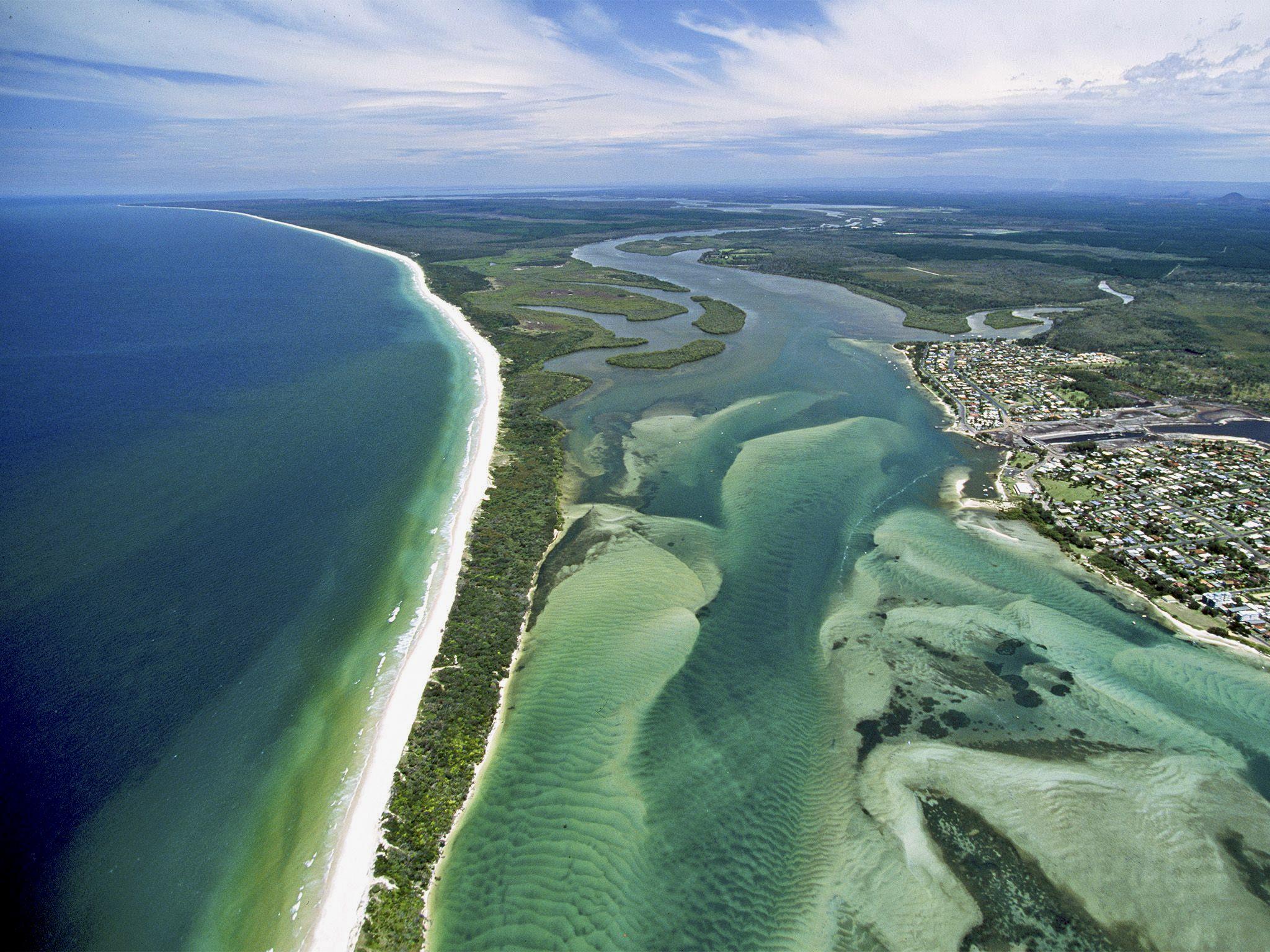
- Migratory species - 40,000 shorebirds who rest and recover before and after their epic journeys on the sandbanks and tributaries of the Pumicestone Passage
- Part of the Moreton Bay Ramsar wetland - a Wetland of International Significance
- Threatened Species and Ecological Communities
This project must be referred to the Commonwealth for determination. State approval does not override federal environmental law. The Commonwealth has written to the proponent outlining their obligations under the EPBC Act.
PLEASE SIGN THIS PETITION CALLING ON THE FEDERAL ENVIRONMENT MINISTER THE HON. MURRAY WATT TO ENSURE THIS PROJECT IS PROPERLY ASSESSED
❌ MYTH 4: “It will bring $100 million to the region.”
✅ FACT: The $100 million figure is derived from economic modelling based on full operational assumptions and has not been independently peer-reviewed.
The Conditions of Approval themselves indicate staged and conditional operations, including:
Economic impact statements often measure gross expenditure, not net regional benefit.
- Capacity limits
- Staged implementation
- Monitoring and compliance requirements
- Event caps
❌ MYTH 5: "The land is empty."
✅ FACT: The site sits within the Northern Inter-Urban Break (NIUB) — a strategic and irreplaceable greenbelt intended to protect regional separation and ecological values.
It is adjacent to the Pumicestone Passage - a wetland of international and national signficance. This is not just 'vacant land'
It is an environmental and amenity buffer that cannot be further eroded.
❌ MYTH 6: “It’s just a strawberry farm — it doesn’t matter.”
✅ FACT: Past agricultural use does not remove environmental responsibility.
1⃣ Previous farming does NOT remove environmental significance. Land can have a history of agriculture and still:
➡ Provide habitat connectivity
➡ Sit within a Ramsar-listed wetland catchment
➡ Contain threatened ecological communities
➡ Trigger Matters of National Environmental Significance (MNES)
Environmental law does NOT say: “If it was farmed before, it no longer matters.”
2⃣ Changing land use changes risk. Intensifying land use with:
➡ Large-scale events (including associated amplified noise and lighting)
➡ Tens of thousands of attendees, a 'Tent City' of 15000 plus 4000+ vehicles (plus trucks and buses) over extended periods
➡ No onsite water supply, no sewage or wastewater treatment plants creates a very different hydrological and ecological risk profile
The question is NOT about farming which can be compatible within the inter-urban break. It is about cumulative, intensive impacts in a sensitive coastal catchment.
3⃣ “It’s going ahead anyway” is not a planning principle.
➡ When a project requires 100+ conditions of approval - as fundamental as these are, signals complexity and risk.
➡ Conditions attempt to manage impact. They DO NOT remove it.
❌ MYTH 7: “The whole area is zoned for housing anyway.”
✅ FACT: The site forms part of the Northern Inter-Urban Break (NIUB).
The NIUB is identified in:
The Sunshine Coast Planning Scheme
The SEQ Regional Plan (ShapingSEQ 2023)
Planning Clarification:
The land is zoned Rural under the Sunshine Coast Planning Scheme and identified as Regional Landscape and Rural Production Area, in addition to forming part of the Northern Inter-Urban Break (NIUB).
Its purpose is to:
➡ Maintain separation between urban areas
➡ Prevent urban sprawl
➡ Protect ecological values
➡ Preserve strategic greenbelt land
It is not identified for urban housing expansion.
The Northern Inter-Urban Break exists specifically to prevent incremental urbanisation between settlements.
Approving high-intensity, permanent uses within it raises serious questions about long-term planning intent and greenbelt protection.
Strategic planning instruments — including planning schemes, regional plans, and associated statutory frameworks — are not symbolic.
They are intended to guide growth, protect environmental buffers, and provide certainty for future generations.
❌ MYTH 8: “It’s not in the Ramsar wetlands.”
✅ FACT: The site sits within the Moreton Bay Ramsar-listed Pumicestone Passage and its surrounding wetlands.
Proximity matters.
Hydrological connection matters.
Cumulative impact matters.
The proposal includes:
➡ Direct adjacency to the Passage
➡ Increased traffic and hardstand
➡ Event-based wastewater and stormwater loads
➡ mobilisation of acid sulfate soils with massive earthworks
An International Wetland of Importance with Ramsar designation is not limited to a line on a map.
Activities adjacent to internationally recognised wetlands can still trigger impacts to:
- Migratory species
- Water quality
- Under federal environmental law, assessment is triggered by likely significant impact — not simply by whether a development footprint falls inside a mapped boundary.
Being “next to” a Ramsar wetland does not remove responsibility nor the impacts
Please sign the petition calling for Federal Environmental Assessment